So, you've got an asphalt driveway, and you know it needs some love to keep it looking good and lasting long. Good for you for thinking about it! The sun here in Los Angeles, especially during those long summer stretches, is no joke on pavement. It bakes the oils right out of the asphalt, leaving it brittle and faded. That's where a good sealcoat comes in.
But when you start looking into it, you'll hear about a couple of main options: slurry seal and asphalt emulsion sealers. People often use these terms interchangeably, but they're actually pretty different products, especially in how they work for a residential driveway. Let's get into what you really need to know.
What's the Deal with Slurry Seal?
Okay, let's clear this up first. When most folks talk about 'slurry seal' for their home driveway, they're usually thinking of a standard asphalt emulsion sealer. A true slurry seal is a much tougher, heavy-duty application. It's a mix of asphalt emulsion, fine aggregates (like sand or crushed rock dust), water, and some chemical additives. It goes on thicker than a typical sealcoat, usually in a single layer that's about 1/4 to 3/8 of an inch thick. You'll see this stuff on city streets, parking lots, and sometimes even larger commercial properties.
The Pros of True Slurry Seal (for what it is):
- Serious Durability: Because it's got aggregate in it, it adds a structural layer. It fills small cracks and voids, and it's built to take a beating from heavy traffic.
- Longer Lifespan: When applied correctly on the right surface, it can extend the life of pavement by several years more than a standard sealcoat.
- Improved Skid Resistance: The aggregate gives it a rougher texture, which is great for traction.
The Cons for Your Driveway:
- Cost: It's significantly more expensive per square foot than an asphalt emulsion sealer.
- Appearance: It has a much coarser, less uniform look. For a residential driveway, it might not give you that smooth, dark, 'brand new' asphalt aesthetic you're probably after.
- Application Complexity: It needs specialized equipment and expertise to mix and apply correctly. It's not a DIY job, and honestly, most residential paving contractors aren't set up to do true slurry seal on a small driveway.
- Curing Time: It takes longer to cure and be ready for traffic.
Then There's Asphalt Emulsion Sealer
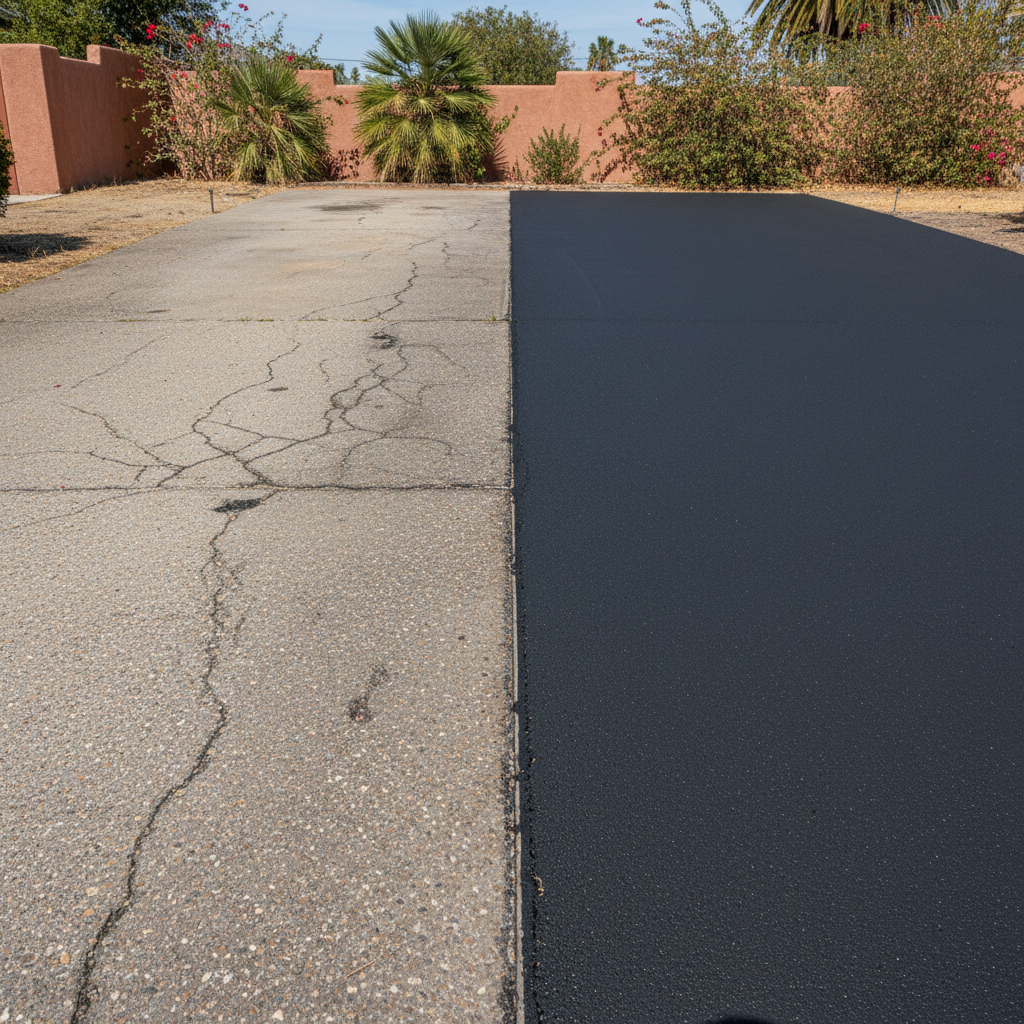
This is what 99% of homeowners actually get when they ask for their driveway to be 'slurry sealed' or 'sealed.' Asphalt emulsion sealers are a blend of liquid asphalt, water, mineral fillers, and polymers. They don't typically contain larger aggregates like sand or gravel, though some higher-quality products might have very fine sand for added traction and durability. They're applied in thinner coats, usually two, to create a protective barrier.
The Pros of Asphalt Emulsion Sealer (for your home):
- Cost-Effective: This is the most affordable way to protect your asphalt driveway.
- Great Appearance: It dries to a smooth, uniform, deep black finish that really makes your driveway pop and look new again. It's what most homeowners expect.
- UV Protection: It acts like sunscreen for your asphalt, preventing the sun from drying out and cracking the binder.
- Waterproofing: It seals the surface, stopping water from getting in and damaging the base layers. This is crucial during our occasional heavy rains, especially in areas like the Hollywood Hills where drainage is key.
- Easy Maintenance: It makes the surface easier to clean and helps prevent oil and gas spills from staining the asphalt.
- Quicker Curing: You can usually drive on it within 24-48 hours, depending on weather.
The Cons:
- Less Structural: It's a protective coating, not a structural repair. It won't fill larger cracks or significantly smooth out major imperfections like a true slurry seal would. You need to repair those first.
- Shorter Lifespan: Typically needs reapplication every 2-3 years, depending on traffic and sun exposure.
Which One Should You Choose for Your LA Home?
Look, for a residential driveway in Los Angeles, you almost certainly want an asphalt emulsion sealer.
Here's why: a true slurry seal is overkill for the typical light traffic a home driveway sees. It's more expensive, looks coarser, and frankly, most residential contractors aren't equipped to do it right on a small scale. What you're really looking for is that deep black, protective finish that an asphalt emulsion provides. It's the best bang for your buck to keep your driveway looking sharp and protected from our intense sun and occasional downpours.
When you call a company like Peak Asphalt Co, and you say you want your driveway 'slurry sealed,' we know you mean you want it sealed with a high-quality asphalt emulsion. We'll make sure any cracks are filled first, then apply two solid coats to give you that fresh, protected look.
So, don't get hung up on the terminology. Focus on finding a reputable contractor who uses quality materials and knows how to prep and apply a good asphalt emulsion sealer. That's the real secret to a long-lasting, great-looking driveway here in LA.